
AI-Based Embryo Selection in IVF
- ART / IVF Research
- 6–8 minutes
- Knowledge Centre
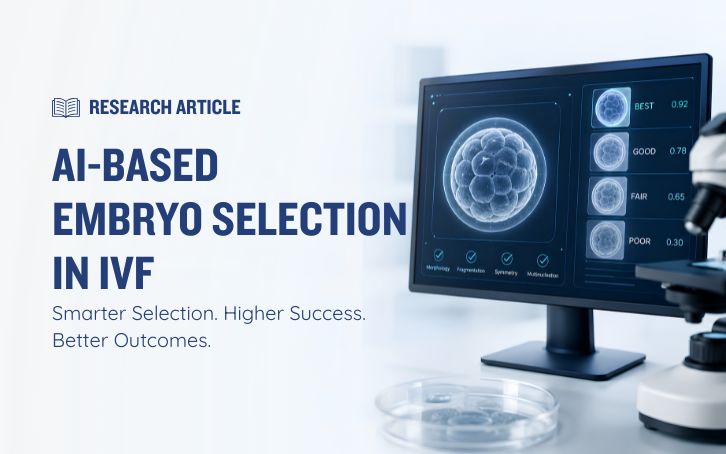
Artificial intelligence is increasingly being explored in assisted reproductive technology, particularly in the assessment and selection of embryos for transfer. Traditional embryo selection relies primarily on morphological assessment performed by trained embryologists, who evaluate characteristics such as embryo development and appearance. AI-based systems offer a different approach by analysing embryo images using deep-learning algorithms and identifying patterns that may not always be apparent through conventional visual assessment.
A multicentre randomized, double-blind, non-inferiority trial published in Nature Medicine evaluated whether deep learning could be used for embryo selection in IVF. The study involved 1,066 patients across 14 IVF clinics in Australia and Europe. Participants were randomly assigned to embryo selection using either a deep-learning algorithm called the intelligent Data Analysis Score (iDAScore) or conventional morphological assessment.
The study evaluated whether AI-supported embryo selection could achieve clinical pregnancy outcomes comparable to standard morphology-based selection. Among the 533 patients in the AI group, the clinical pregnancy rate was 46.5%, compared with 48.2% among the 533 patients in the conventional morphology group. The difference was not statistically significant. However, the predefined analysis did not demonstrate that deep learning was non-inferior to conventional morphology for the primary clinical pregnancy outcome.
These findings are important because they demonstrate that AI should not simply be viewed as a replacement for the embryologist. Rather, AI has the potential to function as a decision-support tool, providing an additional standardized assessment of embryo characteristics. The technology may be particularly valuable in helping laboratories process large amounts of imaging data and reduce some of the subjectivity associated with visual embryo assessment.
One of the potential advantages of AI is its ability to analyse information consistently. Embryologists may differ in their interpretation of embryo morphology, particularly when embryos have similar characteristics. Deep-learning systems can apply the same computational assessment across large numbers of embryos, potentially providing a standardized ranking that can be considered alongside conventional laboratory evaluation.
At the same time, the evidence demonstrates why careful clinical validation is essential. The randomized trial did not establish that AI-based selection produced superior clinical pregnancy outcomes compared with conventional morphology. This means that AI should currently be considered an emerging technology rather than a guaranteed method for improving IVF success.
The future of AI in embryo selection may therefore lie in combining artificial intelligence with embryologist expertise. Rather than replacing clinical judgment, AI could provide additional information that helps embryologists prioritize embryos for consideration. Continued research, larger clinical datasets, external validation and prospective trials will be important in determining which AI systems can provide meaningful benefits in routine IVF practice.
As reproductive medicine becomes increasingly data-driven, AI-assisted embryo assessment represents an important area of innovation. Its ultimate value will depend not simply on how accurately an algorithm analyses embryo images, but on whether its use can translate into meaningful improvements in patient outcomes while maintaining transparency, clinical oversight and responsible decision-making.
Reference
Illingworth PJ, Venetis C, Gardner DK, et al. Deep learning versus manual morphology-based embryo selection in IVF: a randomized, double-blind noninferiority trial. Nature Medicine. 2024;30(11):3114–3120. DOI: 10.1038/s41591-024-03166-5.